
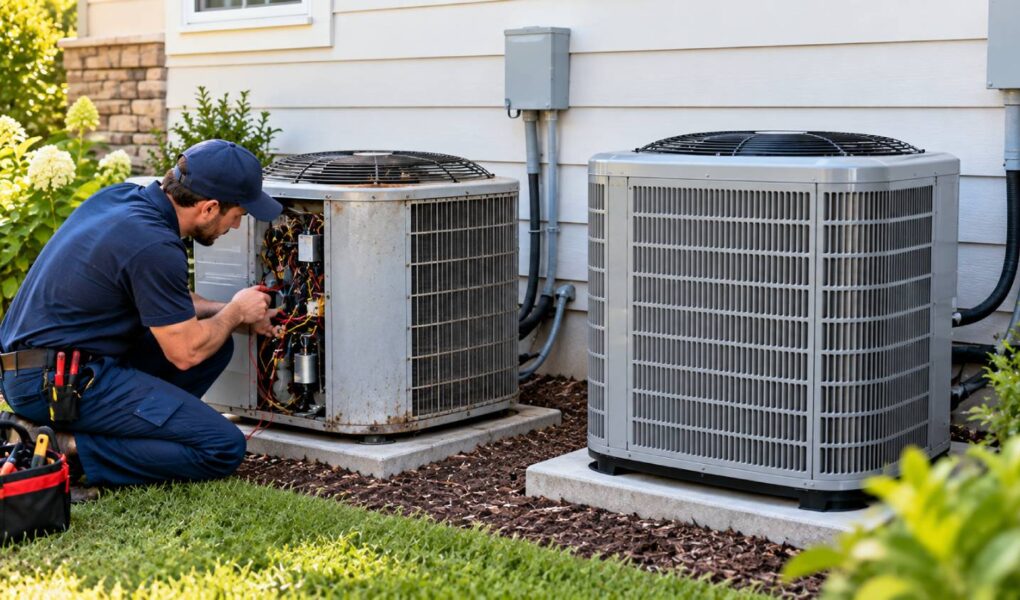
If your air conditioner is struggling, the biggest question is often whether to repair it or replace it. Understanding the warning signs can help you avoid unnecessary expenses, improve comfort, and make a smarter long-term decision. Here is how to know when an aging AC needs attention and when replacement makes more sense.
When an air conditioner stops cooling properly, homeowners often face a frustrating choice: repair the existing system or replace it altogether. While a simple repair can restore comfort, an aging or frequently failing unit may make continued repairs a poor long-term investment. Knowing the difference requires looking at the system’s age, repair history, efficiency, and overall performance. In some situations, new air conditioning installation can provide better reliability and comfort than repeatedly fixing an outdated system. The goal is not simply to spend less today but to choose the option that delivers dependable cooling and better value over time for your household.
When AC Repair Makes More Sense
Not every cooling problem means your system needs to be replaced. Repairs can be a practical choice when the air conditioner is relatively dependable and the problem involves a specific component.
Issues such as refrigerant problems, clogged drains, electrical concerns, thermostat problems, failing motors, or restricted airflow may be repairable without replacing the entire system. Professional diagnosis is important because the visible symptom does not always reveal the underlying problem.
If the system is otherwise performing well, a timely repair and regular maintenance can help extend its useful life. Routine service can also help identify developing problems before they become expensive breakdowns.
Signs Your AC May Be Ready for Replacement
As an air conditioner gets older, repairs can become more frequent while efficiency and comfort decline. A professional evaluation is especially worthwhile when you notice several warning signs at once.
Consider replacement if:
- Your AC is around 10–15 years old or older.
- Repairs are becoming frequent or increasingly expensive.
- Energy bills continue rising despite proper maintenance.
- Your home has uneven temperatures or weak airflow.
- The system produces excessive noise or struggles with indoor humidity.
Age alone does not automatically mean replacement is necessary. However, when an older unit combines poor performance with recurring repair costs, investing in a modern system may offer better long-term value. Schraer Heating & Air Conditioning provides both repair and installation services, allowing homeowners to evaluate their options based on the condition of their existing equipment.
Why a New AC Can Be the Better Investment
A newer cooling system can improve more than temperature control. Modern high-efficiency equipment can provide more consistent comfort while potentially reducing energy consumption. Professional installation also ensures the system is properly matched to the home’s size, layout, and cooling requirements.
Homeowners can choose from several cooling solutions, including central air conditioners, ductless mini-splits, heat pumps, and packaged systems. The right choice depends on the home’s existing setup, comfort needs, available space, and efficiency goals.
If your current system repeatedly breaks down, upgrading to a new air conditioning installation may eliminate the cycle of emergency repairs and help provide more dependable performance.
How to Decide Between Repair and Replacement
Start by asking a few practical questions. How old is the system? How much have you spent on repairs recently? Is it keeping your home comfortable? Are energy costs increasing? Most importantly, does another repair solve a temporary problem or restore reliable performance for the foreseeable future?
A qualified HVAC professional can inspect the equipment, identify the cause of poor performance, and explain whether repair or replacement is more appropriate. Avoid making the decision based solely on the price of the immediate repair.
FAQs
Q.1 How old should an AC be before replacing it?
Ans: Many systems begin requiring more attention around the 10–15-year mark. Age should be considered alongside repair frequency, efficiency, and overall performance.
Q.2 Is frequent AC repair a sign I need a new system?
Ans: It can be. Repeated repairs may indicate that the system is approaching the end of its useful service life, particularly when repair costs continue increasing.
Q.3 Can a new AC lower energy costs?
Ans: A newer, high-efficiency system may use energy more effectively than an aging unit. Actual savings depend on equipment, usage, home conditions, and installation quality.
Q.4 Should I repair an AC that still cools my home?
Ans: If the system is reliable and the repair is relatively minor, repairing it may be sensible. A professional inspection can help determine whether continued repairs are worthwhile.
Q.5 What should I consider before replacing my AC?
Ans: Consider system age, repair history, comfort problems, energy costs, home size, and the type of cooling system that best fits your property.
Final Thoughts
Choosing between AC repair and replacement is ultimately about balancing immediate costs with long-term performance. A straightforward repair can make sense when the system is dependable, relatively young, and experiencing an isolated problem. However, frequent breakdowns, rising energy bills, weak airflow, uneven temperatures, and an aging system can signal that replacement deserves serious consideration.
Before making a decision, have the equipment professionally evaluated and ask for a clear explanation of its condition. Compare the expected cost of continued repairs with the benefits of improved efficiency, comfort, and reliability from a modern system. When replacement is the more practical choice, new air conditioning installation can provide a fresh start and dependable cooling for years ahead. A properly selected and professionally installed system can also better match your home’s needs, helping you stay comfortable while making a more informed investment in your home’s cooling performance.