
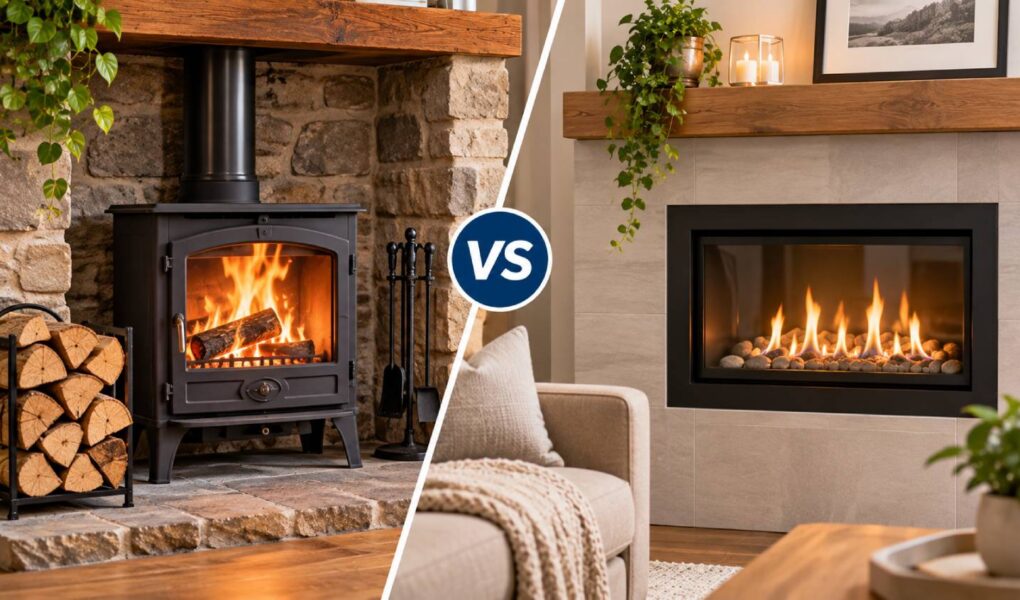
Choosing between a wood-burning and gas fireplace involves more than deciding which flame looks better. Your choice affects everyday convenience, heating performance, maintenance requirements, indoor air quality, and installation needs. Understanding these differences can help you select a fireplace that complements your home and fits your lifestyle.
For homeowners considering professional fireplace installation in Minneapolis, MN, local winter conditions, existing chimney arrangements, and long-term maintenance should all influence the decision. Both fireplace types can create a comfortable living space, but each has distinct advantages that are worth considering before committing to an installation.
Understanding the Differences Between Wood and Gas Fireplaces
Wood-burning fireplaces use logs as fuel, creating a traditional fire with natural flames, crackling sounds, and a distinctive wood aroma. They appeal to homeowners who appreciate the experience of building and tending a fire. However, they require a suitable fuel supply, proper ventilation, and regular cleaning.
Gas fireplaces burn natural gas or propane, depending on the model and available fuel supply. Many feature electronic ignition, wall switches, or remote controls, making it possible to enjoy a flame without handling logs or removing ash. They can also provide consistent heat with less routine cleaning than traditional wood-burning fireplaces.
Neither option is automatically suitable for every home. The best choice depends on your heating goals, available space, installation requirements, and willingness to perform regular maintenance.
Wood-Burning Fireplaces Offer Traditional Charm
A wood-burning fireplace creates an atmosphere that many homeowners associate with classic winter evenings. The appearance of real logs and the sound of a natural fire can make a living room feel inviting, particularly during cold weather.
Wood fireplaces can also provide useful supplemental heat when the unit is designed and operated appropriately. However, their actual heating performance depends on the fireplace design, fuel quality, airflow, and how effectively heat is distributed throughout the room.
There are practical considerations to remember. Firewood needs a dry, accessible storage area, and logs must be loaded manually. Ash and soot accumulate during use, while combustion can produce smoke and fine particles. Poor ventilation or an obstructed chimney can allow smoke to enter the home.
Creosote, a flammable residue that forms inside chimneys as wood smoke cools, is another important concern. If it accumulates, it can increase the risk of a chimney fire. Regular chimney inspections and appropriate cleaning help identify this hazard before it becomes more serious.
A wood-burning fireplace may suit households that value traditional ambiance, have convenient access to properly seasoned firewood, and are comfortable with the additional upkeep.
Gas Fireplaces Provide Convenience and Consistent Heat
Gas fireplaces are often appealing to homeowners who want warmth without the routine associated with burning wood. Starting a fire is generally straightforward, and many models allow users to adjust the flame or heat output using a control switch or remote.
Because gas fireplaces do not burn logs, they avoid the ash and creosote associated with conventional wood fires. This can reduce routine cleaning demands, although the burner, venting system, ignition components, and other parts still require appropriate maintenance.
Gas units may also offer more flexibility when planning a new fireplace or upgrading an existing one. Depending on the model, a direct-vent system can draw combustion air from outdoors and send exhaust outside through a dedicated vent. This arrangement can be useful in homes where a traditional masonry chimney is unavailable or unsuitable.
However, gas fireplaces require a compatible fuel supply and proper installation. Natural gas units need an appropriate gas connection, while propane models require a suitable propane supply. Installation may also involve venting work, clearances, and compliance with local building requirements.
Gas is worth considering if convenience, adjustable operation, and reduced routine cleaning are high priorities. Nevertheless, the right model must match the room, heating requirements, and available installation arrangements.
Compare Heating Needs, Operating Costs, and Maintenance
Before choosing a fireplace, consider how you intend to use it. A fireplace used occasionally for atmosphere may have different requirements from one expected to contribute meaningfully to household heating.
Heating performance varies by model, so compare the manufacturer’s stated heat output and efficiency information rather than assuming that every wood or gas unit performs similarly. Room size, insulation, ceiling height, and the home’s existing heating system also affect comfort.
Operating costs depend on local firewood, natural gas, or propane prices, as well as fuel consumption and how frequently the fireplace runs. Installation expenses can differ substantially depending on whether the project requires a new chimney, gas line, venting system, or modifications to an existing fireplace. Obtain a detailed estimate that accounts for these requirements.
Maintenance should also factor into your budget and schedule. Wood-burning fireplaces generally need more frequent cleaning because they produce ash and combustion deposits. Gas fireplaces require less routine cleaning but still need periodic professional inspection to check safe operation, connections, and venting.
Consider these practical factors when comparing the options:
- Fuel storage: Wood requires dry storage, while gas depends on an available supply.
- Daily convenience: Gas is generally easier to start and control, while wood requires more preparation.
- Cleaning: Wood produces ash and soot; gas systems still need routine care.
- Heating performance: Compare the output and efficiency of individual models.
- Installation requirements: Assess chimney compatibility, venting, clearances, and any necessary structural changes.
These considerations provide a more reliable basis for choosing than appearance alone.
Plan for Safe Installation and Long-Term Use
Regardless of fuel type, correct installation is essential. A fireplace must have suitable clearances from combustible materials, an appropriate venting arrangement, and a design compatible with the home’s structure. Incorrect installation can create fire hazards, ventilation problems, or unsafe combustion conditions.
For wood-burning systems, the chimney and flue must be suitable for the appliance and in sound condition. Damaged masonry, blocked passages, or an improperly functioning damper can interfere with safe operation. Homeowners should also ensure that the fireplace screen or doors, where specified by the manufacturer, are used appropriately.
Gas fireplaces need careful attention to fuel connections, burner operation, and exhaust ventilation. Carbon monoxide is an odorless gas produced by incomplete combustion, and unsafe appliance operation can expose occupants to it. Install carbon monoxide alarms according to applicable guidance and manufacturer instructions, and never ignore an alarm or signs of possible combustion problems.
Professional assessment is particularly useful when replacing an older fireplace, converting from wood to gas, or installing an insert in an existing firebox. The existing chimney may not be suitable for the new appliance without modifications. An installer can evaluate the opening, ventilation, clearances, and model requirements before work begins.
Once the fireplace is operating, follow the manufacturer’s maintenance schedule and arrange inspections appropriate to the system. Smoke entering the room, unusual odors, damaged components, or changes in flame behavior warrant investigation rather than continued use without assessment.
Final Thoughts
Wood-burning and gas fireplaces can both improve comfort, but they suit different priorities. Wood offers a traditional fire experience and requires more hands-on care, while gas provides convenient operation and generally less routine cleaning. Heating performance, operating expenses, ventilation, and installation requirements should all influence your final decision.
Before purchasing a unit, have the proposed installation area and existing chimney or venting system assessed. Discuss your heating goals, fuel availability, and maintenance expectations with a qualified professional. Careful planning and appropriate installation can help you choose a fireplace that meets your household’s needs and remains safe to operate over time.


